Rafael Fyen’s Journal

I write about things that don't get much attention, including things I couldn't find answers to on the web. You'll find posts about tech, obscure media, odd bits of knowledge, and whatever else is on my radar. This journal is also a dumping ground for my photography.

  1. BATS! From Mt. Moon to the Banks of the Wisła

    I remember sitting with my aunt and uncle on the banks of the Wisła in my hometown of Płock, Poland. It was a humid summer evening, late enough that the mosquitoes and gnats hung in clouds over the water. Then small, jagged shapes started swooping through them. I realized they were bats, I had up until that point never seen them in flight. I was fascinated.

    Before that evening, I knew bats mostly from movies and video games. Tim Burton’s Batman and the video game series Castlevania had a lot to do with that.

    A bat-shaped childhood

    I was born in 1985, so I was just getting into toys when Tim Burton’s Batman, starring Michael Keaton, came out in 1989. The marketing was everywhere. The yellow-and-black bat logo showed up on t-shirts, lunchboxes, and TV. For a while, it felt like everyone had bats on their mind. I had several plastic action figures with polyester capes that I made my parents purchase.
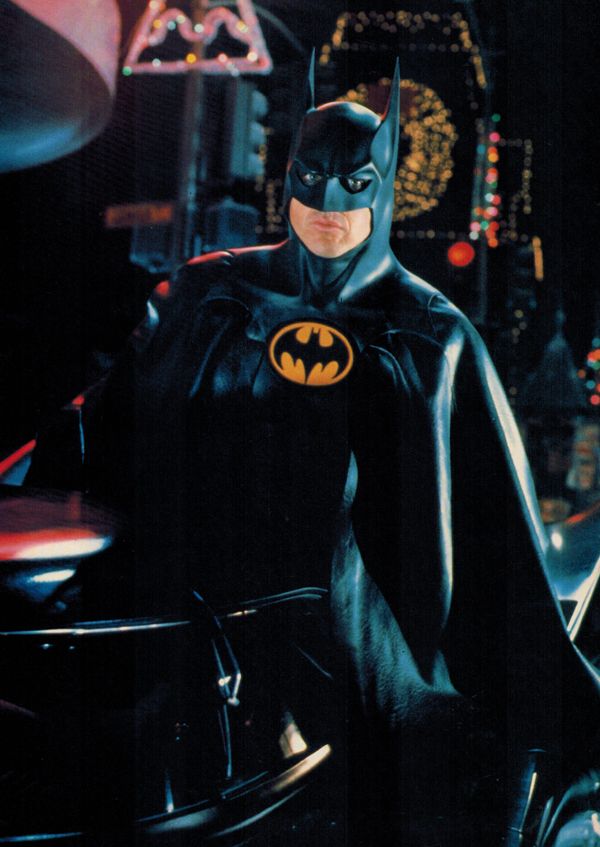
    Michael Keaton as Batman in Batman Returns (1992)
    Michael Keaton as Batman in Batman Returns (1992). © Warner Bros. Entertainment Inc.

    Bats in the games

    That bat-mania followed me into my childhood bedroom, where I spent hours playing video games.

    In the games I grew up with, bats were quite common. In Castlevania and The Legend of Zelda, they’d hang from the ceiling until you got close, then dive straight at you. They were easy enough to kill, but their speed and jittery movement kept you on your toes.

    In The Legend of Zelda: A Link to the Past, I remember entering the sewer at the start of the game and getting swatted by bats (named Keese) in the pitch dark. It took me a while to figure out I had to light the torches to see what was going on.
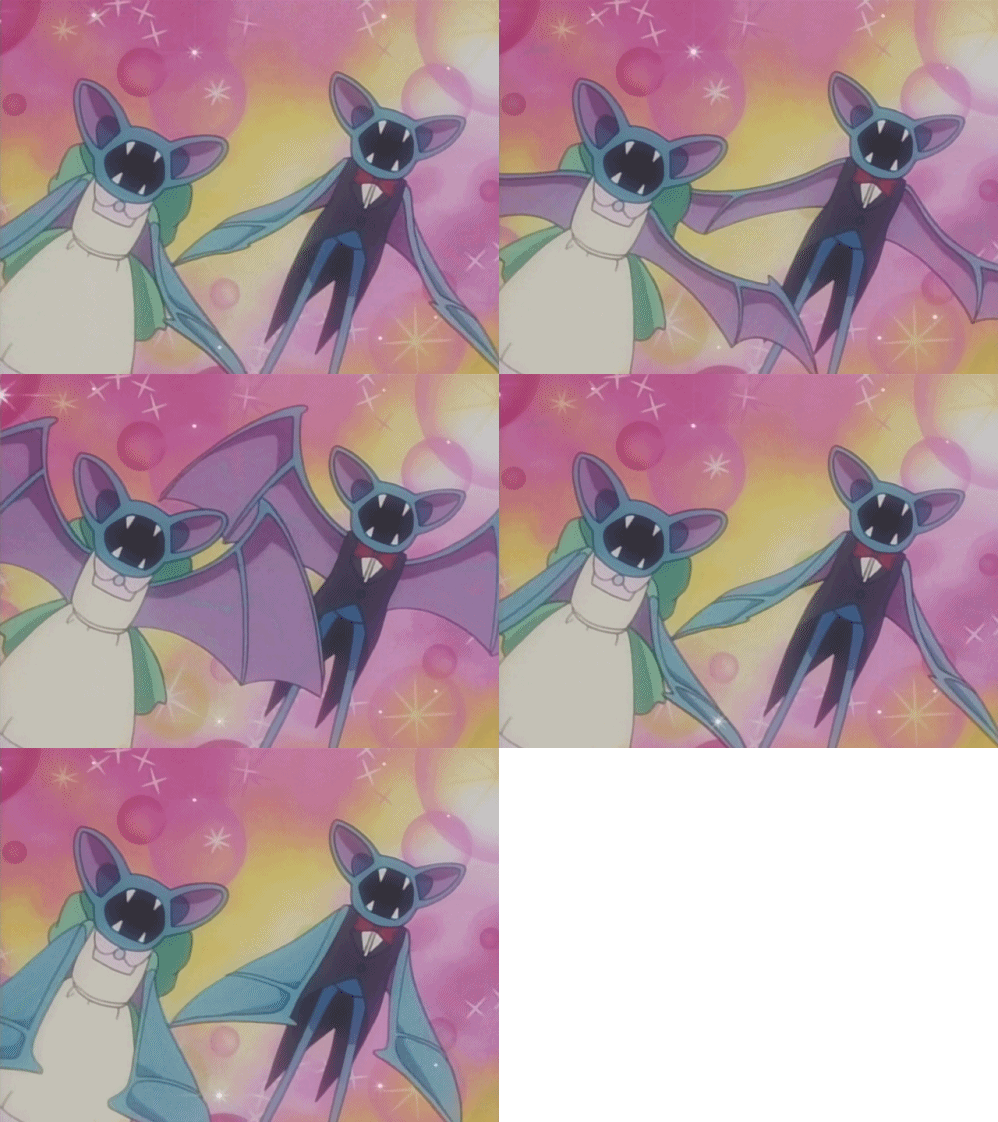
    Zubat fever-dream in the S04E08 episode of the Pokémon TV show (2000)
    Zubat fever-dream in the S04E08 episode of the Pokémon TV show (2000). © Nintendo, Game Freak, Creatures Inc., TV Tokyo, ShoPro, and JR Kikaku.

    Then came the Game Boy and the first generation of Pokémon, with Zubat. If you ever went into Mt. Moon or another cave in the video game without a stack of Max Repels, you know how often they showed up. The encounter rate was ridiculous. Battons in the NES Mega Man games were a different kind of nuisance, following you in that slow, precise arc.

    The contrast is hard to miss. In games, bats are a pest. In real life, they’re unobtrusive and important for the natural habitat.

    The real thing

    Now I live in Skåne, Sweden, and see bats around parks and beaches, and under the roofs of older buildings. Sweden has 19 bat species. I think I see the Eptesicus nilssonii (or Northern Bat) most often, though I’d need an ultrasound detector to be sure. That's the bat in my logo/branding.

    Northern bat (Eptesicus nilssonii)
    Northern bat (Eptesicus nilssonii), photographed in Tirol, Austria. Photo by Mnolf, via Wikimedia Commons, licensed under CC BY-SA 3.0.

    I love having them around. They glide through the night sky, making tiny, high-pitched squeaks that remind me of an old, unoiled bicycle. It’s funny that pop culture taught me to see bats as obstacles. After years of dodging and being frustrated by them in dark dungeons, watching them fly across a Swedish park feels like a correction of sorts.
  2. Super PLAY, the magazine I grew up on

    In the late ’90s and early ’00s, I read Super PLAY, an independent Swedish video game magazine. I’d mostly forgotten about it until I found the old issues scanned and uploaded by Jonathan Eng at Super PLAY arkivet. The original publisher, Atlantic Förlags AB, has uploaded some scans too.

    The magazine started in 1993 under the name Super Power, focusing exclusively on Nintendo at first. In 1995, it expanded to cover all console makers, and by 2001, it added PC coverage as well.

    I think my first issue was the March 1996 issue. Its hot-pink cover featured Orchid from Killer Instinct. I can still picture it.

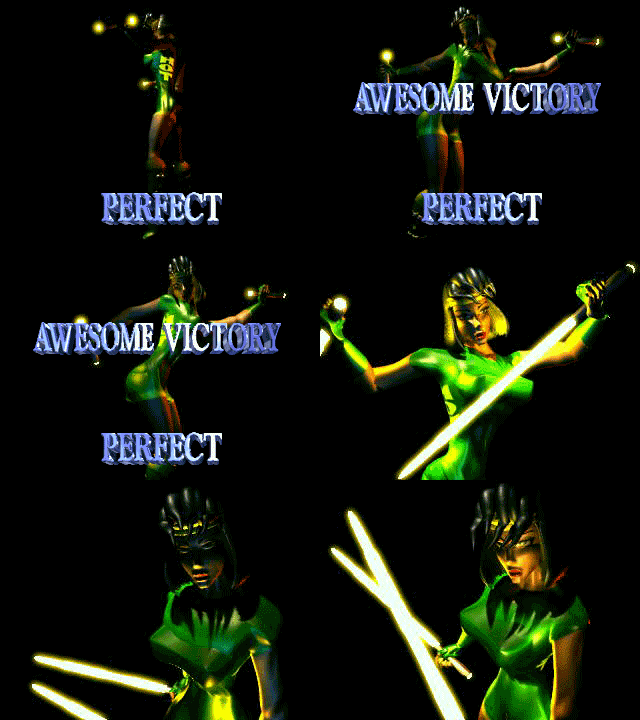
    Orchid in Killer Instinct
    Orchid's victory animation in Killer Instinct Arcade. © Midway; developed by Rare.

    What I loved

    The writing probably wouldn’t win any prizes, but it was my main source of video game news. I read every word.

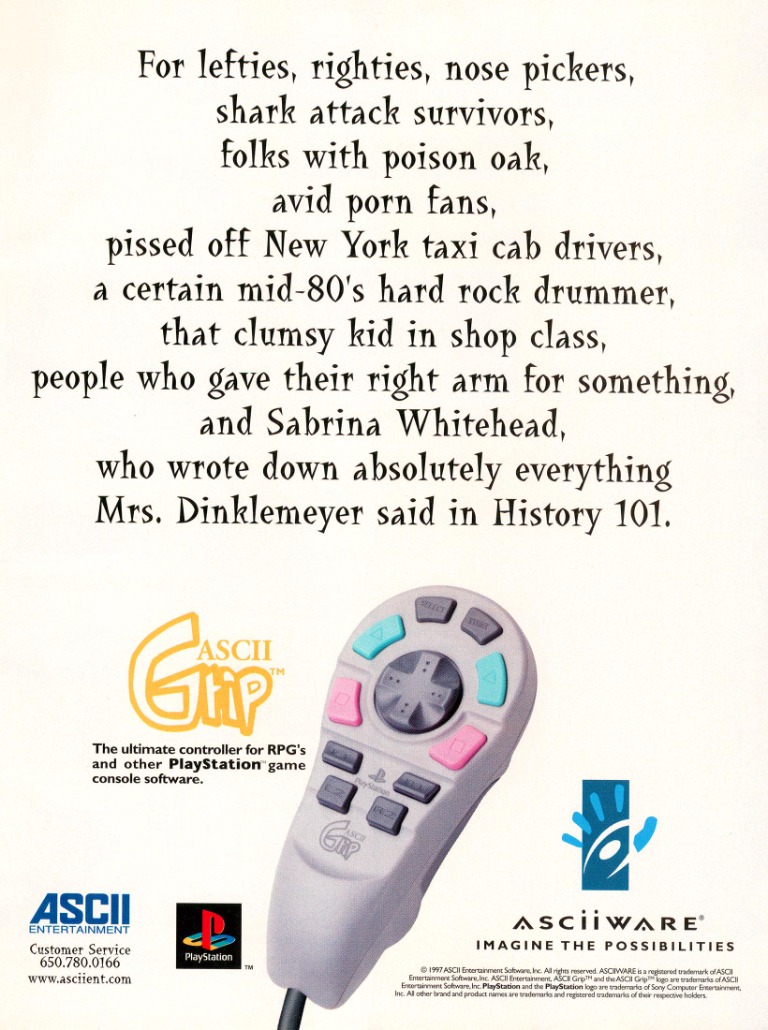
    My favorite parts were the news section, Hype, and Fokus, which covered Japanese role-playing games (JRPGs), anime, and arcades. I even pored over the ads for games and accessories. I remember staring at the ASCII Grip, a one-handed PlayStation controller made for JRPGs, and imagining myself on the couch with one hand free for snacks as I played all those expensive Japanese imports.

    ASCII Grip PlayStation controller
    Video game peripherals were more interesting back in the day, especially controllers. © ASCII Entertainment.

    The magazine had strong opinions, and luckily for me, its tastes often matched mine. Each review had an overall score and four sub-scores: graphics, sound, playability, and challenge. The review boxes were small, so each category got one sentence. Those blurbs could be wildly over the top, in either direction, and full of superlatives.

    Flicking through paper

    I enjoyed the scans enough that I recently bought several physical issues. There’s something about flicking through the pages in person.

    I miss magazines. They gave us a shared culture, before algorithms split us into separate echo chambers. I often read opinions I disagreed with, which was good for my still-forming tastes. Later, Super PLAY changed its reviews: one writer handled the main piece, and others added a few paragraphs with their own takes. It was a good way to make room for different tastes.

    I also loved sitting down with a physical magazine. No notifications, no distractions. Just reading.

    Circulation was around 20,000 to 30,000 copies. That may sound modest, but people passed issues around, so the actual readership was at least twice that. The magazine had a real cultural impact and published 164 issues before it closed in late 2009.

    Competing for attention

    Super PLAY wasn’t the only magazine around. Svenska PC Gamer was a fantastic PC magazine, and Missil was a sleek, premium lifestyle magazine for “hardcore gamers.” Later, Player 1 arrived for a slightly older audience. It felt more approachable and inclusive than Missil, which eventually returned as a website.

    The web years

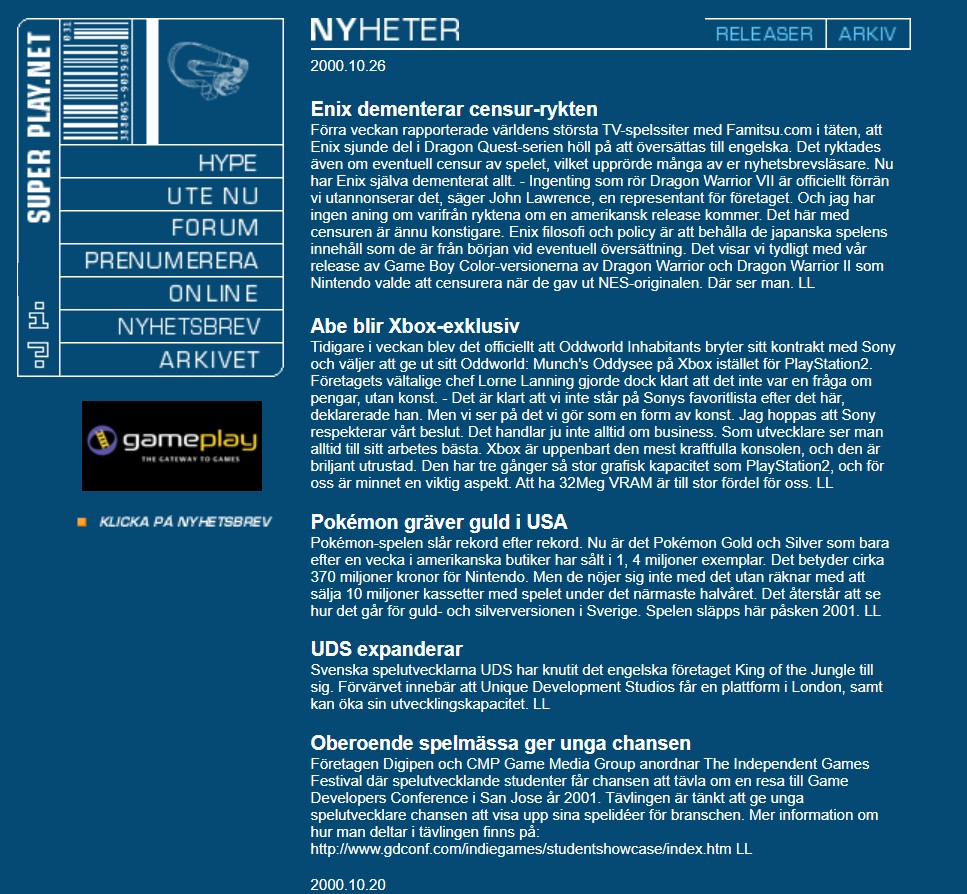
    Super PLAY launched a barebones website in 1999. I often visited the forum and news section, though I mostly lurked.

    The old "blue" website
    The old "blue" website. Screenshot © Atlantic Förlags AB.

    That changed in early 2003, when they hired someone to design and code a new message board. It became my main online hangout, before social media took over. I was an admin for a couple of years, and friends I made there helped me start my own video game websites. I loved that scrappy early-2000s web.

    Archival footage from Super PLAY DVD 02 (2002), featuring Thomas Wiborgh demoing Super Monkey Ball on ZTV’s Wimans. © Hjemmet Mortensen AB / Medströms Dataförlag.

    Most people still had slow internet, so the magazine sometimes came with a DVD of trailers, interviews, and other extras. One of my favorite clips came from a collaboration with youth TV channel ZTV and its show Wimans. A Super PLAY writer dropped by to demo a Super Monkey Ball minigame on the Nintendo GameCube. It brought together one of the most-watched live shows for teenagers and the country’s most-read youth magazine, at least among boys.

    My takeaway

    I miss having something to look forward to each month. We were starved for information, so a new issue felt like an event. We talked about articles in the schoolyard, imagined games in motion from a handful of screenshots, and studied the ads to plan what we’d buy if we ever had the money. The developers seemed like rock stars. Their work made gaming feel larger than life, part of a worldwide phenomenon backed by a huge industry.

    Having one main source also gave you the sense that you knew what was going on. Of course, you didn’t. The magazine missed plenty and had to choose what to cover, but its editors took games seriously and did their best to make sense of them. I prefer that to social media shitposting, where engagement matters more than the bigger picture.

    And is it just me, or do magazines smell nice? I should get an EDGE Magazine subscription while it’s still around. You should too. Keep print alive.

  3. What is a blog?

    These days, blog can mean a site stuffed with long articles written to climb the SEO rankings (although they barely generate any money nowadays). That’s a far cry from the personal websites the word brings to my mind: someone writing about what they’re into, and putting it online for whoever happens to find it. A blog can still be that simple.

    From web logs to personal journals

    Early blogs often read like public journals. People wrote about their days, linked to odd and interesting corners of the web, and kept notes where anyone could stumble across them. No feed to keep up with, no pressure to turn every thought into a post that would perform.

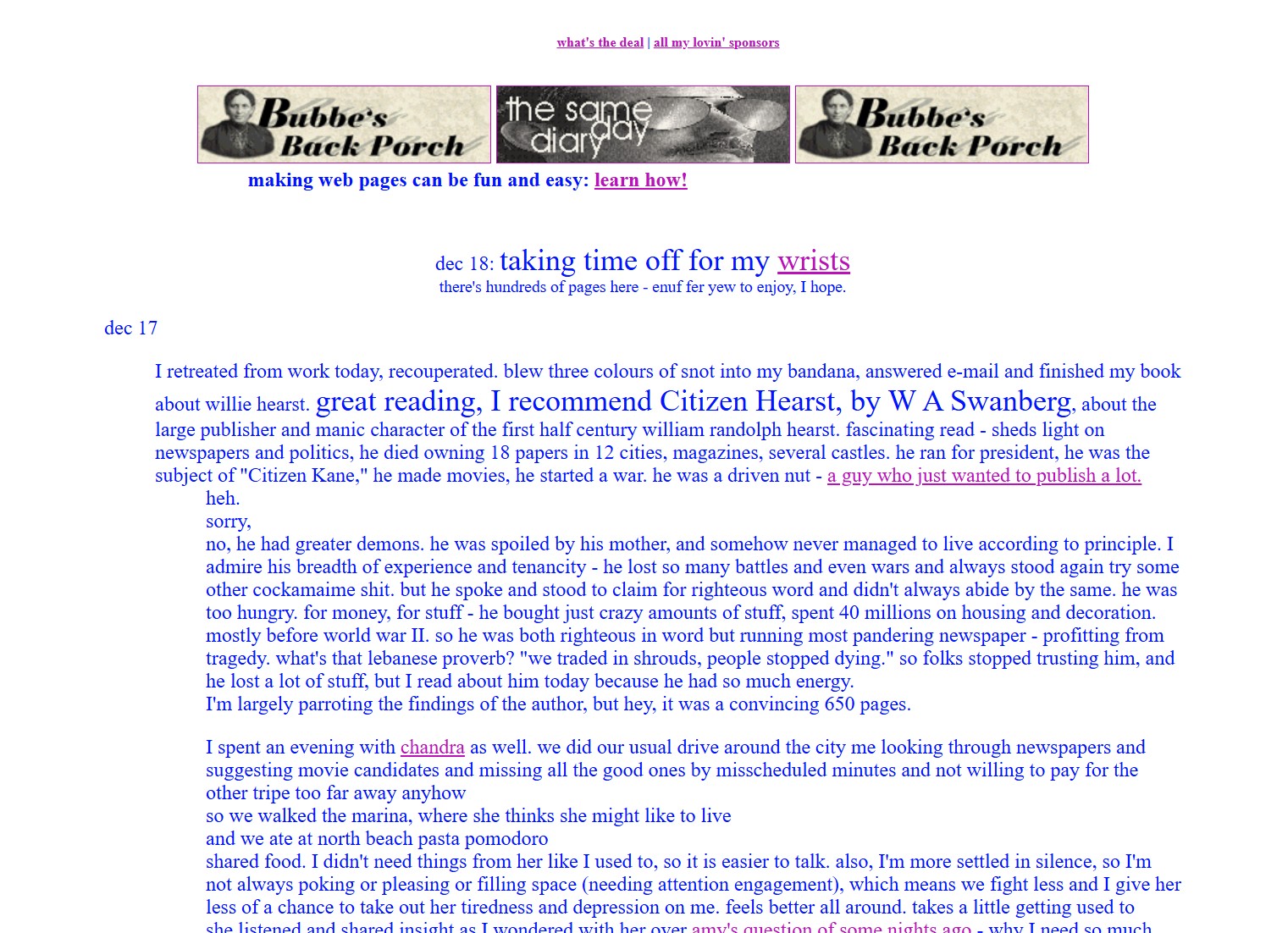
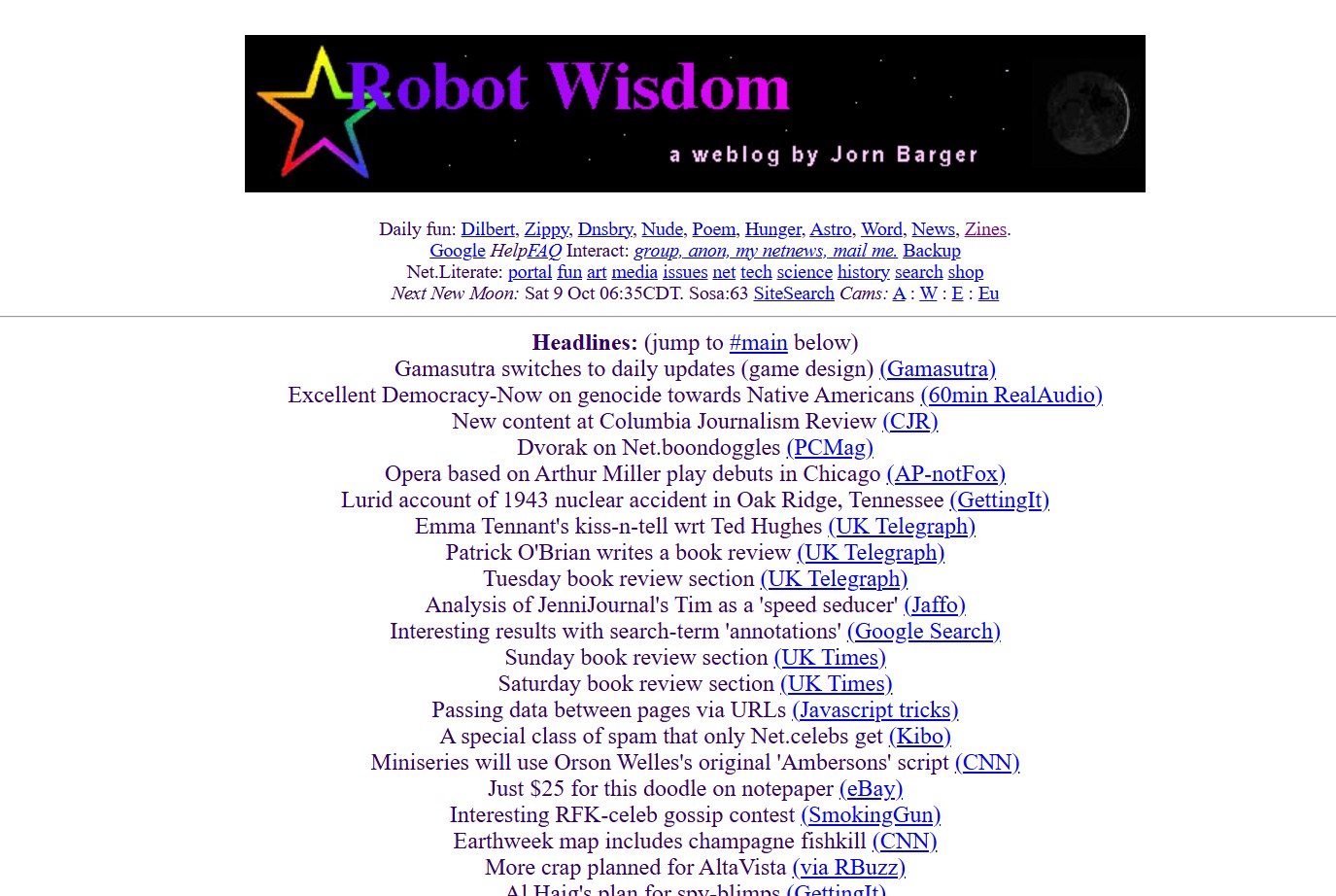
    Justin Hall’s Links.net, launched in 1994, is often cited as one of the first personal blogs, though personal websites existed before it. The name came later: Jorn Barger coined weblog in 1997 to describe what he was doing on his site, Robot Wisdom.

    Screenshot of Justin Hall’s Links.net website
    Justin Hall’s Links.net, launched in 1994. © Justin Hall.
    Screenshot of Jorn Barger’s Robot Wisdom weblog, with a list of links beneath its banner
    Jorn Barger’s Robot Wisdom "blog" in 1999. © Jorn Barger.

    In 1999, writer Peter Merholz jokingly split weblog into we blog. The shorter word stuck. The sites themselves were personal and scrappy, often put together by whoever was writing them.

    Why blog in 2026?

    Social platforms have their uses, but they set the terms. They decide how posts look, what reaches people, and what gets rewarded. Often, that means whatever grabs attention fastest.

    I’m not trying to win a traffic contest with this blog. I want somewhere to write about things like lost media and obscure Swedish curiosities without cutting the story down to fit a caption. Social media is useful for pointing people to a post, but it’s awkward for the post itself. There’s rarely room for all the context, and the next thing is always one swipe away.

    The right medium for the right work

    A short post might get noticed, but some subjects need more space. On a blog, I can add the background, include examples, or take a detour if it helps. I don’t have to make every thought fit someone else’s format.

    It’s nice when someone finds my posts through a link or a search. But even when nobody’s reading, the posts stay here for whoever might find them interesting later. In the meantime, I find the subjects interesting. That’s reason enough for me to keep writing.